


Decide what you want to keep
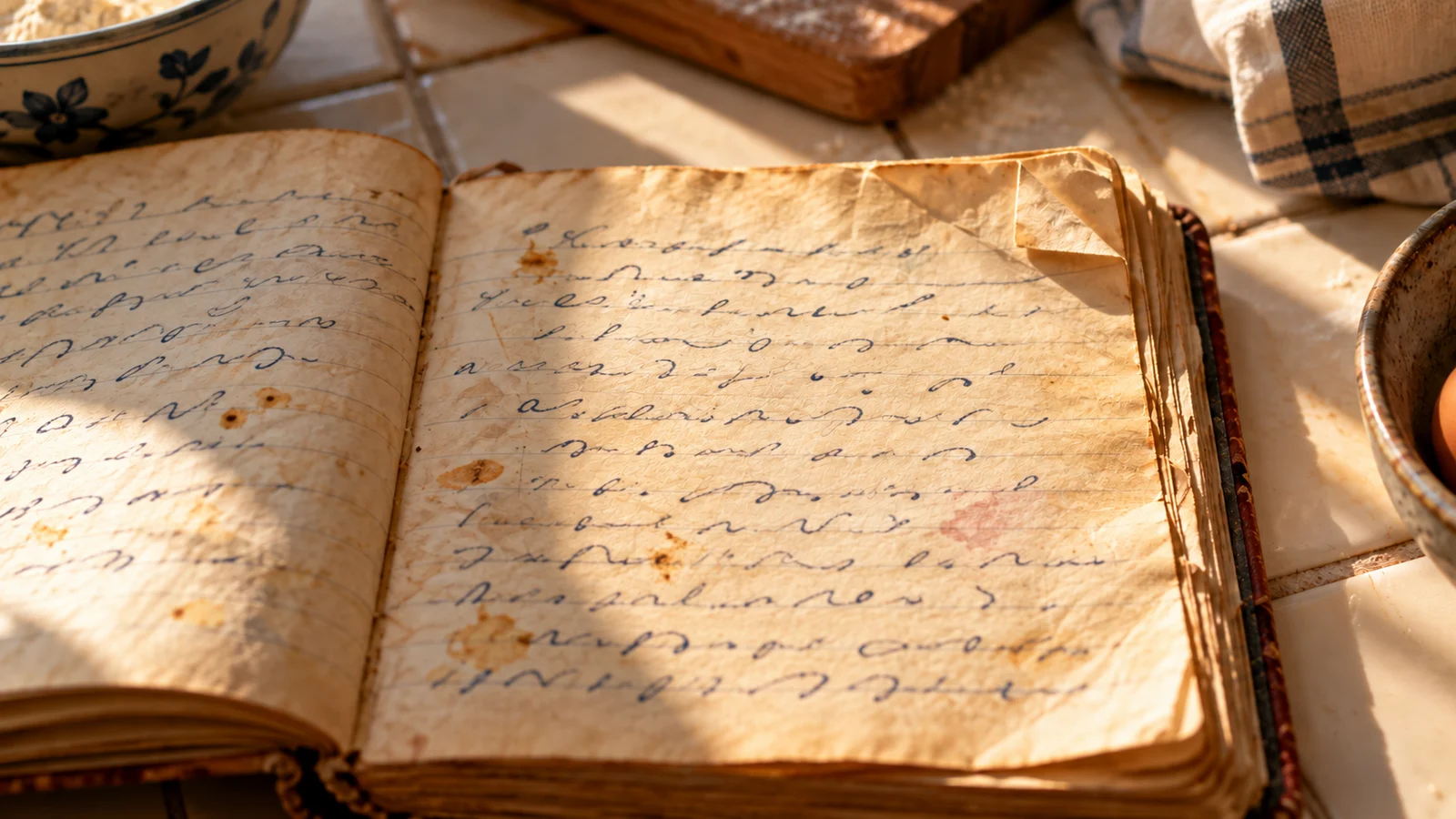
An old recipe may include more than ingredients: a crossed-out quantity, a note in another person’s handwriting or a mark beside a favorite dish. Before scanning, decide which details belong in the digital record.
Keep a separate camera photo when the paper color, a faint pencil mark or the surrounding notebook matters. A cleaner scan and a photograph can serve different purposes. Compare both with the physical page rather than assuming that cleaner always means more faithful. Keep a version without handwriting removal, so that notes and corrections stay in the record.
Include the pages that explain each other
Check the back of the sheet and the next page before you finish. A short note such as “use the same oven temperature as the previous recipe” may refer to a recipe elsewhere in the notebook. Capture that reference too, or record what it refers to in a separate note.
With a bound notebook, support it at a comfortable opening instead of forcing the spine flat. vFlat can flatten curved book pages, but you still need to check that faint writing and words near the binding remain legible in the result.
Keep your transcription separate
If you type the recipe out for easier reading, keep the scan alongside it. Do not assume automatic text recognition will read every handwritten fraction, abbreviation or correction correctly.
When a quantity is unclear, mark it as unclear rather than silently choosing a number. Ask someone who knows the recipe if possible. Label later adjustments as your own notes so a future reader can tell the original wording from a newer version.
Add the context that is missing from the page
In a companion note, record who wrote the recipe, what the family calls it and when it was usually made. If you do not know, leave the detail open. A guess written confidently can become hard to distinguish from a memory.
A useful filename might pair a dish with its author, such as sesame-biscuits_grandma-notebook.pdf. Use names that your family recognizes; the goal is to find the page, not to impose a catalog on it.
Make a copy someone else can open
Export a readable version and open it outside the scanning app. Check the order, the edges and any writing on the back. Save the original photos, the scans and your companion notes together in your chosen storage, with a backup.
When sharing, include the image of the handwritten page as well as the typed recipe if you made one. That leaves the next reader free to cook from the easy-to-read version and still see the handwriting that made you want to save it.