


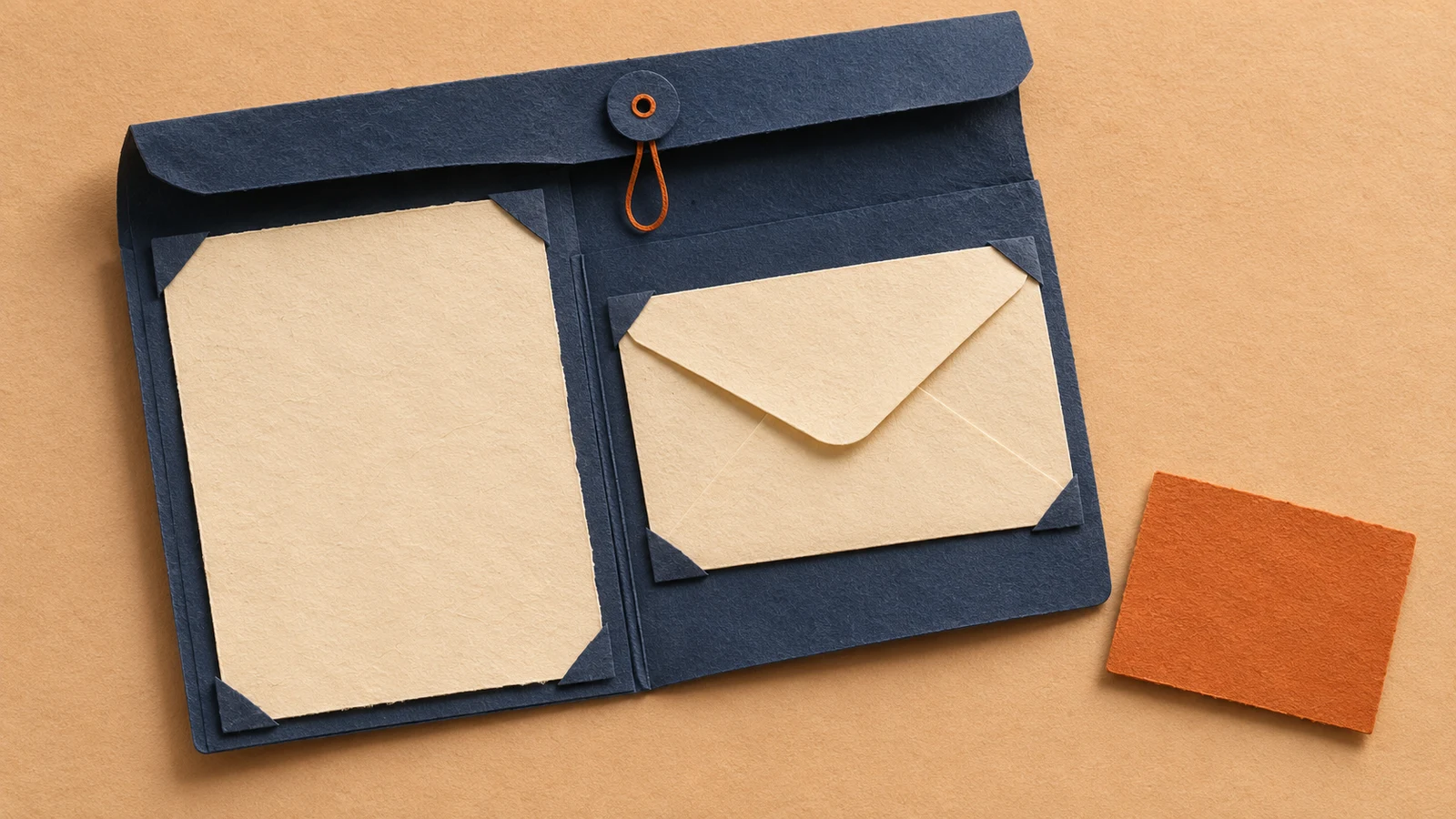
Keep the letter and envelope connected
Start with one letter and its envelope. The Smithsonian National Postal Museum recommends keeping these together. For your digital set, capture the letter’s pages and any envelope sides that carry information, then put the files in the same folder. Do not force open paper that resists handling.
Add a separate context note
The U.S. National Archives recommends recording who, what, where and when with digital files. Create a short text note beside the scans: who wrote to whom, any place or date shown, and where the originals are stored. Keep this note separate from the images so your explanation is distinguishable from the document.
Make uncertainty visible
If a name is hard to read or a date is missing, say so. For example, write “sender uncertain” instead of turning a guess into a fact. If a relative supplies an identification, record who provided it. This is an editorial way to keep later interpretation separate from what is visible on the page.
Review the set and keep the originals
Open the folder as if you were seeing it for the first time. Can you tell which envelope belongs to the letter and find the context note? Resolve unclear pairings before starting another set. Keep the paper originals after scanning, as the National Archives advises. A scan is an additional way to consult the letter.